Recycling and Sustainability — Commercial Waste Removal Thamesmead
 Commercial Waste Removal Thamesmead services now put sustainability at the core of every route and depot. Our approach to eco-friendly waste disposal and a dedicated sustainable rubbish area for businesses in Thamesmead focuses on reducing landfill, increasing reuse and championing a circular economy across both the Royal Borough of Greenwich and the London Borough of Bexley. We work with companies of all sizes to create bespoke waste plans that prioritise resource recovery and measurable environmental outcomes.
We have set a clear recycling percentage target for commercial clients: a 70% diversion rate from landfill within three years for mixed commercial streams where practicable, and a 50% uplift in reuse or donation for furniture, appliances and textiles. These targets drive operational choices — from segregation at source to consolidation in local transfer hubs — and are part of our environmental commitment to low-carbon, efficient commercial waste removal in Thamesmead.
 Our route planning and transfer strategy relies on nearby transfer stations and household recycling centres operated across southeast London. We coordinate with local civic amenity sites and transfer stations in neighbouring boroughs to ensure collected material enters the correct streams quickly and with minimal handling. This reduces journeys, cuts emissions and helps items — paper, card, glass, metals and plastics — reach specialist processors faster for higher quality recycling.
Local Recycling Activities and Boroughs’ Approach
Both the boroughs that serve Thamesmead encourage separation at source. In practice this means businesses are supported to segregate: dry recycling (paper, cardboard, cans, plastics), glass, food/organic waste where applicable, and residual waste. The borough approaches vary slightly — some areas emphasise separate food waste collection and dedicated glass banks, while others operate co-mingled dry recycling with robust sorting downstream — but the shared goal is the same: maximise recovery and minimise contamination.Commercial rubbish clearance Thamesmead programmes are designed to align with these local policies, offering tailored containers, colour-coded signage and staff training so that on-site segregation reflects borough guidance and improves recycling yields. We also provide audit reports so businesses can track progress against the recycling percentage target and identify quick wins for further reductions in residual waste.

Charity Partnerships and Reuse Networks
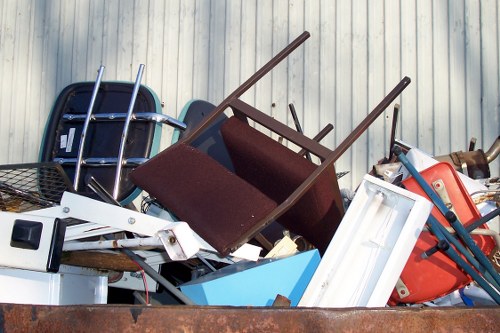
We actively partner with local charities, social enterprises and reuse centres to extend the life of goods suitable for donation. Typical pathways include:- Furniture and appliances: assessed, repaired and rehomed by community reuse partners;
- Textiles: sorted for resale or recycling through local charity shops and specialist textile recyclers;
- E-waste and small electronics: routed to certified refurbishers or secure recycling streams.
 Operational sustainability also depends on low-carbon logistics. Our Thamesmead commercial waste fleet increasingly uses electric and hybrid vans, and where appropriate, vehicles running on low-carbon HVO or renewable fuels. This reduces tailpipe emissions for pickups and drop-offs across the riverside and residential-commercial fringe. Route optimisation software, load consolidation and local consolidation hubs cut unnecessary mileage and improve collection density for a smaller carbon footprint.
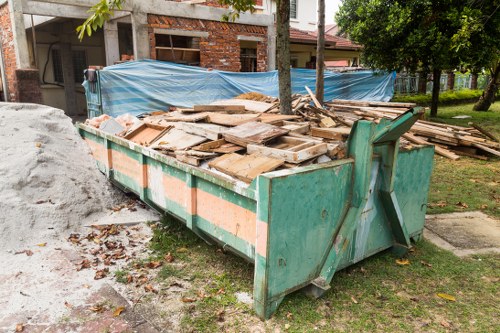
We combine these transport measures with on-site initiatives: segregation bays in the sustainable rubbish area, clear signage for staff, and compactors or balers where space and waste type make them efficient. For construction and demolition waste around Thamesmead redevelopment sites, we prioritise on-site source separation (wood, concrete, metal, mixed inert) to increase recycling rates and reduce skip movements.
 Monitoring and transparency are part of our service. Businesses receive regular environmental reports showing tonnes diverted, percentage recycled against the target, carbon savings from low-carbon vans and routes, and outcomes from donated items. We support accreditation and environmental management systems, and work to embed continuous improvement so that Thamesmead commercial waste removal becomes ever more resource-efficient.
Practical sustainability measures also include secure data destruction for electronic waste, documentation for hazardous and specialist wastes, and contractor-led projects to recover high-value materials from demolition and refit jobs. By aligning collection practices with local recycling infrastructure, businesses help ensure materials are not just collected but actually recycled or reused.
Our partnerships with community groups help circulate goods back into the local economy, creating social value while reducing environmental impact. These collaborations are central to a broader strategy that mixes recycling, reuse and carbon reduction to deliver a resilient model of eco-friendly waste disposal suited to Thamesmead’s evolving urban landscape.
We encourage organisations to adopt clear waste hierarchies: prevent where possible, reuse and repair, recycle and finally responsibly dispose. Through a combination of ambitious recycling percentage targets, close work with transfer stations and charities, and a modern low-carbon van fleet, the future of commercial waste in Thamesmead can be both greener and more circular.